

What You’ll Learn in This Article
- Understand common hidden causes of fatigue
- Learn how stress affects energy and recovery
- Recognize signs of emotional exhaustion
- Discover practical lifestyle habits that may improve focus and energy
- Understand why sleep alone does not always fix tiredness
You sleep, but still wake up exhausted.
Your body feels heavy. Your motivation drops. Your mind feels foggy. Even simple daily tasks start feeling mentally draining.
Today, many people think constant fatigue is normal because life has become stressful, fast, and mentally overwhelming. But in many cases, persistent tiredness is your body’s way of telling you that something deeper needs attention.
Many people do not even realize they are mentally exhausted. They simply think:
“I am physically weak.”
“Something is wrong with my body.”
“I have no energy anymore.”
The good news is that constant fatigue usually has common contributing factors. In many mild-to-moderate cases, people notice major improvement after improving sleep, reducing stress, increasing movement, improving hydration, and controlling digital overstimulation.
By understanding the hidden causes discussed in this article, many people start recognizing how stress, poor sleep, emotional exhaustion, phone addiction, and daily lifestyle habits may quietly affect their energy levels. In many mild-to-moderate cases, improving these factors may help support better focus, recovery, mental clarity, and overall well-being.
Let’s understand some of the most common hidden causes of fatigue today.
Doctor’s Observation
In both clinical and online consultations, I commonly observe that many people are not physically weak in the traditional sense.
For many people, fatigue starts mentally and emotionally before it becomes physical.
In many cases, stress, poor sleep, emotional exhaustion, overstimulation, and daily lifestyle habits quietly affect energy, focus, recovery, and overall well-being.
Here are some of the most common hidden reasons why many people feel constantly tired even after sleeping or resting.
1. Long-Term Stress and Mental Overload

One of the biggest causes of fatigue today is stress lasting for weeks or months.
Many students, office workers, business owners, and career-focused individuals stay mentally active all day long. Even while resting, their brain continues overthinking.
Over time, this mental pressure exhausts the body.
Common signs include:
- feeling tired but unable to relax
- racing thoughts
- poor concentration
- low motivation
- waking up exhausted
- feeling emotionally drained
Many people are not physically overworked.
They are mentally overloaded.
2. Poor Sleep Quality
Sleeping for 7–8 hours does not always mean your body is recovering properly.
Many people:
- wake up repeatedly during sleep
- sleep late because of phones
- use screens before bed
- stay mentally stressed at night
As a result, the brain never fully relaxes.
Signs of poor sleep quality include:
- waking tired
- brain fog
- morning headaches
- daytime sleepiness
- needing caffeine constantly
Your body repairs itself during deep sleep. Without proper recovery, fatigue slowly builds up.
Detail is discussed in related article why-do-i-wake-up-tired.
3. Excessive Phone Use and Social Media Overload

Constant phone use is one of the biggest modern causes of mental fatigue.
Many people spend hours:
- scrolling TikTok
- watching YouTube Shorts
- checking notifications
- consuming nonstop content
The brain stays overstimulated all day.
This affects:
- sleep quality
- focus
- dopamine balance
- stress levels
- emotional recovery
Late-night screen exposure may also affect melatonin, the hormone that helps regulate sleep.
Many people underestimate how much phone addiction drains their mental energy.
4. Blood Sugar Crashes
Your eating habits strongly affect your energy levels.
Frequent intake of:
- sugary snacks
- soft drinks
- processed foods
- fast food
can cause rapid blood sugar spikes followed by sudden crashes.
Common symptoms include:
- sudden sleepiness
- weakness after eating
- shakiness
- irritability
- cravings
- poor concentration
Balanced meals with protein, fiber, and hydration usually support more stable energy levels.
5. High Stress Hormones (Cortisol)
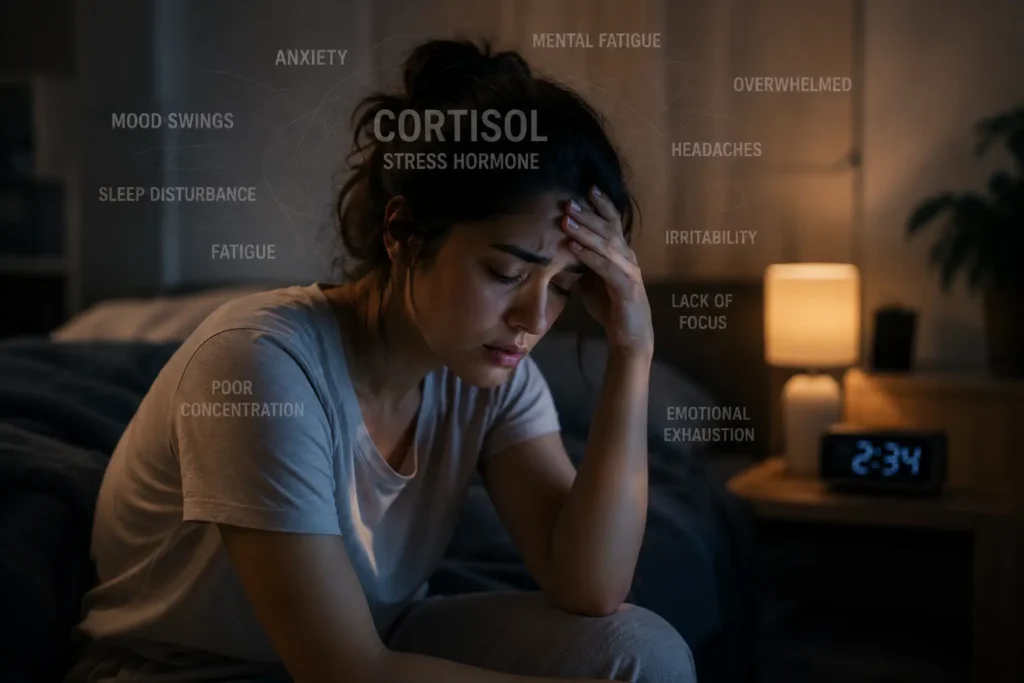
Cortisol is commonly called the stress hormone.
Short-term stress is normal. But when stress continues for long periods, cortisol levels may stay elevated.
Many people then start feeling:
- tired but unable to sleep properly
- mentally restless
- anxious
- emotionally exhausted
- constantly overwhelmed
Some people describe this feeling as:
“wired but tired.”
6. Vitamin Deficiencies
Low levels of important nutrients may also contribute to fatigue.
Common deficiencies linked with tiredness include:
- Vitamin D
- Vitamin B12
- Iron
- Magnesium
Possible symptoms include:
- weakness
- low energy
- dizziness
- poor focus
- body aches
Persistent fatigue should not always be ignored.
7. Emotional Burnout

Burnout is different from normal tiredness.
Many people push themselves mentally every single day without proper emotional recovery.
Over time, they start feeling:
- emotionally numb
- mentally exhausted
- unmotivated
- disconnected from life
This is extremely common in highly ambitious people constantly chasing goals while ignoring recovery and balance.
If your main concern is constant tiredness with low motivation and no energy, read my detailed guide on why you may feel tired and have no energy. Why Am I Always Tired and Have No Energy?
8. Dehydration
Many people simply do not drink enough water.
Too much caffeine and low hydration may affect:
- focus
- mood
- energy
- physical performance
Even mild dehydration can make fatigue worse.
9. Lack of Physical Activity

Ironically, inactivity can increase fatigue.
Long hours of:
- sitting
- studying
- office work
- scrolling phones
reduce circulation and lower energy levels over time.
Simple physical movement such as:
- walking
- stretching
- light workouts
- resistance training
can improve both physical and mental energy.
10. Poor Diet and Processed Foods
Your body cannot produce stable energy from poor nutrition.
Highly processed diets often affect:
- blood sugar
- inflammation
- gut health
- recovery
Many people rely heavily on:
- fast food
- sugary coffee drinks
- snacks
- energy drinks
while lacking proper protein, minerals, fiber, and hydration.
11. Anxiety and Overthinking

Anxiety does not only affect emotions.
It also exhausts the body.
Constant worrying and overthinking keep the nervous system under pressure for long periods.
Many people with anxiety-related fatigue experience:
- racing thoughts
- poor sleep
- low motivation
- brain fog
- emotional exhaustion
Mental fatigue slowly becomes physical fatigue.
12. Hormonal Imbalances
Hormones strongly affect:
- energy
- sleep
- metabolism
- mood
- recovery
When hormones become imbalanced — especially during long periods of stress, poor sleep, emotional exhaustion, or unhealthy lifestyle habits — many people start feeling constantly tired without understanding why.
This is particularly common in:
- women under stress
- people sleeping poorly
- individuals with rapid weight changes
- people under emotional pressure for long periods
13. Medical Conditions That Should Not Be Ignored
Sometimes fatigue needs proper medical evaluation.
You should consult a healthcare professional if fatigue is associated with:
- rapid weight gain
- sudden weight loss
- severe insomnia
- waking repeatedly during sleep
- chest pain
- breathing difficulty
- fainting
- persistent weakness
- depression symptoms
Ignoring severe fatigue for months is not always safe.
How to Start Improving Your Energy Naturally

In many mild-to-moderate fatigue cases, lifestyle improvement alone can make a major difference.
The practical recovery tips discussed below may help many people better understand how daily habits quietly affect both mental and physical energy over time.
Practical Recovery Steps
For many mild-to-moderate fatigue cases, improving daily habits can make a meaningful difference.
- Improve sleep timing and sleep quality
- Reduce phone use before bed
- Increase hydration and protein intake
- Add daily walking or light exercise
- Manage stress and mental overload
Frequently Asked Questions
Poor sleep quality, stress, hormonal imbalance, mental overload, and lifestyle habits can affect recovery even after enough sleep.
Yes. Excessive phone use and constant digital stimulation may affect sleep quality, dopamine balance, focus, and mental recovery.
Yes. Long-term stress can affect sleep, hormones, mental recovery, and nervous system balance, leading to persistent fatigue.
Vitamin D, B12, iron, and magnesium deficiencies are commonly associated with fatigue and weakness.
Fatigue should be medically evaluated if it becomes severe, persistent, or associated with major weight changes, chest pain, breathing difficulty, or severe insomnia.
Final Thoughts
Constant fatigue is not always simply “laziness” or physical weakness.
In today’s world, many people are mentally overstimulated, emotionally exhausted, sleep deprived, and constantly stressed without fully realizing how deeply it affects their body.
Understanding the root causes of fatigue is often the first step toward improving energy, focus, recovery, and overall health.
Medical Disclaimer
This article is for educational and informational purposes only and should not replace professional medical advice, diagnosis, or treatment.
If symptoms are severe, persistent, or affecting your daily life, consult a qualified healthcare professional for proper evaluation and personalized guidance.
If needed, you may also seek personalized health guidance through the contact section available on this website.